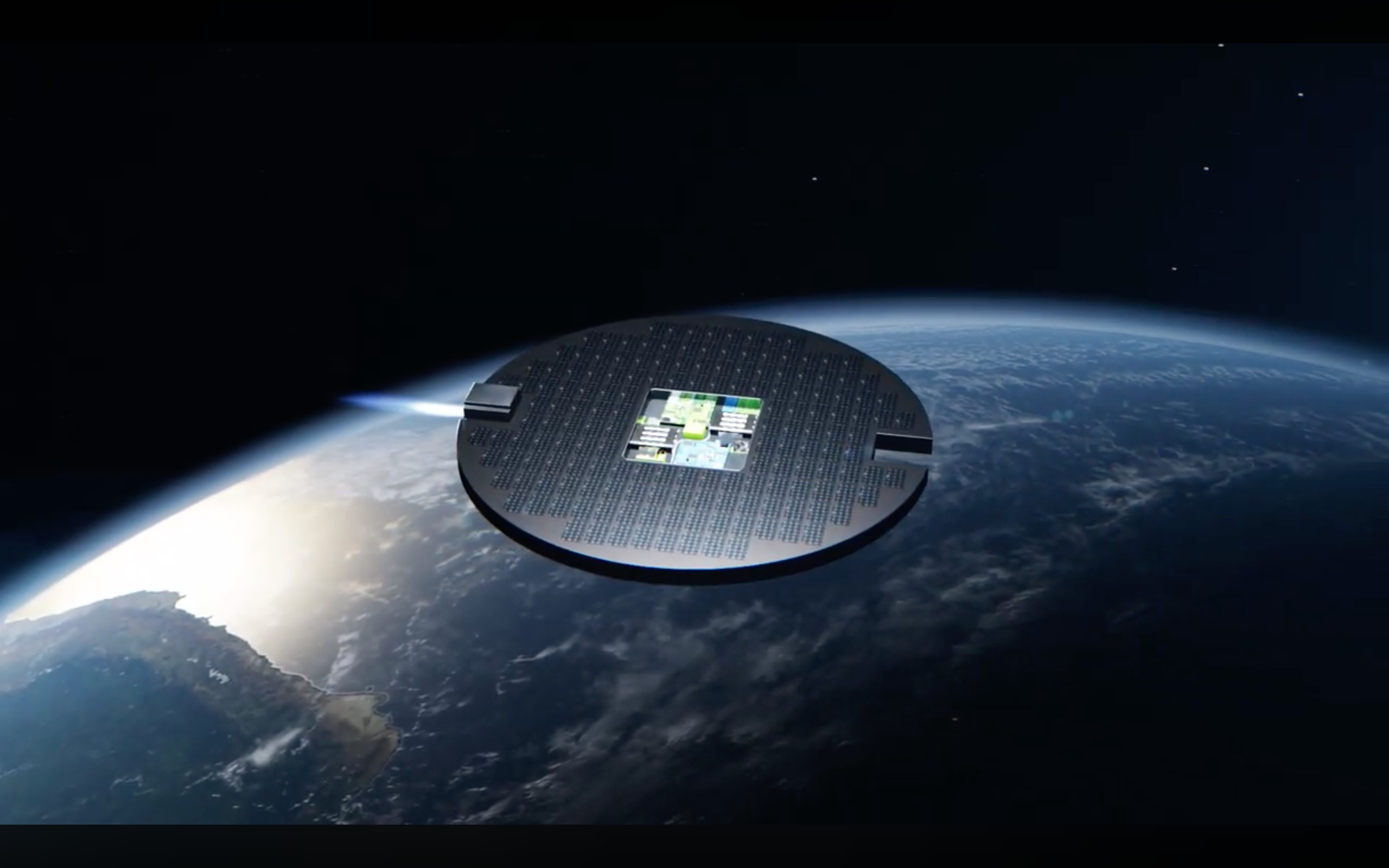



When Satellites Become Targets
The celestial battlefield above Earth has transformed from Cold War fantasy into contemporary reality. While James Bond films romanticized satellite warfare decades ago, today’s orbital environment hosts a genuine military contest as global powers race to develop offensive capabilities and defensive countermeasures for space-based assets.
The American monopoly on space superiority—cemented during Cold War victories over the Soviet Union—has evaporated. Earth’s orbit now teems with independently launched spacecraft from China, the United States, Iran, Israel, Japan, Russia, North Korea, South Korea, and the European Space Agency. Over 50 countries and multinational organizations currently operate space assets, with more than 8,300 active satellites circling the planet as of early 2025.
The Dual-Use Dilemma
Technological accessibility has democratized both satellite launch services and the weaponry threatening them. Declining costs and advancing capabilities blur distinctions between civilian and military applications. Robotic arms exemplify this ambiguity—equally suited for inspecting and repairing defunct satellites or conducting clandestine operations including hacking, destruction, or obstruction.
China demonstrated this dual-use potential in December 2021 when its Shijian-21 debris mitigation satellite rendezvoused with a non-operational Beidou-2 G2 navigation spacecraft, towed it from geostationary orbit, and released it into a disposal trajectory. US Space Force tracking confirmed the maneuver, showcasing precision orbital manipulation capabilities with obvious strategic implications.
America Sounds the Alarm
The US Department of Defense outlined deterrence strategies in its September 2023 Space Policy Review and Strategy on Protection of Satellites report. The document identifies China as rapidly expanding space-leveraged combat power to prevail in modern military conflicts. Increasingly sophisticated space-based intelligence, surveillance, and reconnaissance networks combined with improved command systems enhance precision and accuracy of missile systems China would deploy to counter American forward presence, particularly across the Western Pacific.
Pentagon doctrine emphasizes denying adversaries the ability to utilize space capabilities for attacking joint forces or preventing the United States from advancing critical national security objectives. Operations could target on-orbit assets, ground infrastructure, cyber systems, or communication links using reversible and irreversible means across all operational domains.
The 2018 Wake-Up Call
Warning bells initially sounded in December 2018 with the National Air and Space Intelligence Center’s unclassified “Competing in Space” report. The 25-page assessment detailed developing trends and growing challenges from foreign space assets, noting that both China and Russia were creating new military forces devoted to space and counter-space capabilities while regularly integrating them into exercises.
The report emphasized American and allied dependence on space-based communications, early warning systems, surveillance platforms, and navigation satellites—all vulnerable to adversary efforts to outmaneuver or deny those capabilities. Critically, the assessment noted that disruptive efforts faced no mitigation from international agreements or legal frameworks.
The Arsenal Above
Anti-satellite weapons could employ diverse techniques including radio frequency jammers, directed energy systems, lasers, chemical sprayers, nets, grappling equipment, microwave devices, or traditional kinetic impact vehicles. The technological variety reflects the challenge of defending against multiple attack vectors simultaneously.
Current international forums have pursued legal frameworks for responsible space conduct without achieving global consensus. Efforts to increase operational transparency, avoid deliberate debris-generating events like anti-satellite weapon tests, and prevent weapon placement in space remain aspirational rather than enforceable.
The Legal Vacuum
China and Russia continue endorsing a draft Treaty on the Prevention of Placement of Weapons in Outer Space promoting “no first placement” principles. However, the proposal fails to address numerous anti-satellite weapon categories and lacks meaningful verification mechanisms—a fatal flaw enabling continued weapons development while publicly maintaining that space remains a peaceful domain.
University of Adelaide academics evaluated space conflict likelihood in April 2018, concluding that orbital warfare represents not “if” but “when.” Professor Melissa de Zwart, then-dean of Adelaide Law School, emphasized that legal regimes governing force and armed conflict in outer space remain profoundly unclear. The few international treaties addressing space provide minimal regulation of modern activities encompassing both military and commercial uses.
Racing Without Rules
Draft resolutions and decisions currently languish before the United Nations assembly promoting “no first placement of weapons in outer space.” In practice, international rule-making proceeds well after competitive dynamics have solidified. The anti-satellite warfare race and corresponding defensive measures are already underway and accelerating.
The fundamental challenge persists: writing enforceable frameworks for an environment where verification proves exceptionally difficult, national security interests supersede transparency commitments, and technological capabilities advance faster than diplomatic consensus. Space militarization continues expanding despite rhetorical commitments to peaceful purposes, creating an orbital environment where every satellite faces potential targeting and every nation with space assets confronts security vulnerabilities.
The next generation of space conflict will determine whether humanity can establish functional governance for the ultimate commons or whether orbital space devolves into an ungoverned domain where might makes right.