

University of Colorado at Boulder researchers have built a groundbreaking plasma tunnel simulating extreme conditions spacecraft face during atmospheric reentry. This facility creates plasma flows replicating intense heat and pressure of hypersonic flight, providing crucial insights into how materials withstand violent reentry forces. With space tourism expanding, ensuring spacecraft safety during this critical phase becomes essential.
The Science Behind It
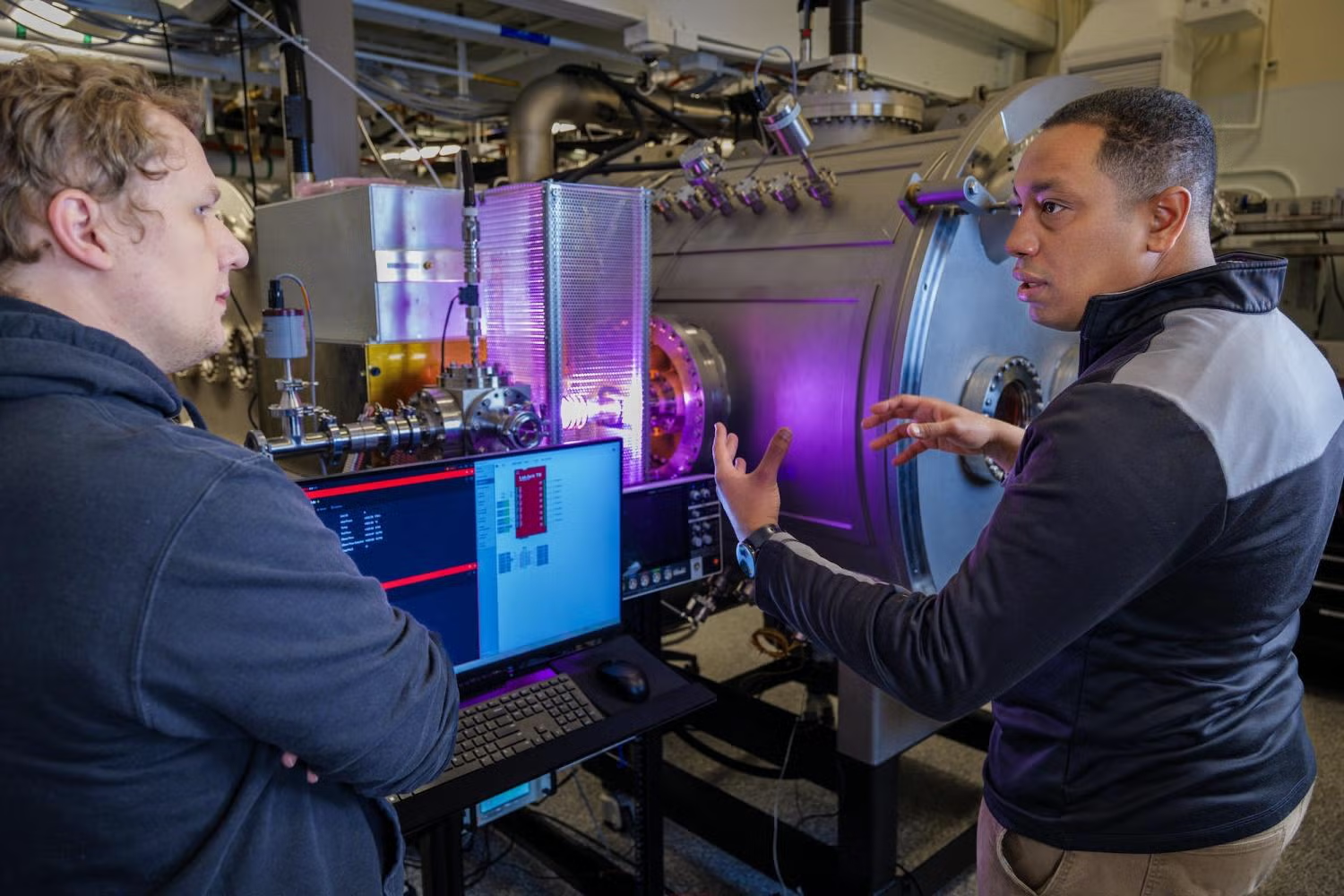
Developed by Hisham Ali’s team, the plasma tunnel is one of the first globally. It tests materials, heat shields, and sensors under intense conditions.
“Reentry is the most critical and dangerous phase,” Ali explained. “With more humans going to orbit through space tourism, we need safe solutions—that’s challenging.”
Reaching 9,000 degrees Fahrenheit—hotter than the sun’s surface—the tunnel recreates intense shockwaves from hypersonic atmospheric entry. The facility uses a vacuum system injecting gases like argon, energized by radio frequency waves to produce plasma.
Beyond Earth’s atmosphere, the facility can replicate Mars conditions by injecting carbon dioxide, creating plasma mirroring what spacecraft might encounter in Mars’ thin atmosphere.
Inspiration and Testing
Ali’s passion began at Space Camp in Alabama, where he touched a NASA heat shield tile while a blowtorch heated the opposite side. “You could still feel it was cool,” he recalled. This sparked his lifelong interest in space safety.
The tunnel proves invaluable for testing heat-resistant materials and technologies, improving spacecraft design and ensuring astronaut safety. As space tourism becomes feasible, this research creates safer spacecraft for passengers while advancing exploration of other planetary atmospheres.
Magnetic Control Innovation
Ali’s team explores using powerful magnets to help spacecraft maneuver through extreme reentry. Traditional controls like wings fail at hypersonic speeds due to intense heat and pressure. Strong magnets manipulating plasma shockwaves could potentially change spacecraft trajectory during reentry.
“Plasmas are charged particles, and powerful magnets can potentially change their flow,” Ali said. This approach could revolutionize spacecraft control, improving safety and maneuverability in harsh environments.