


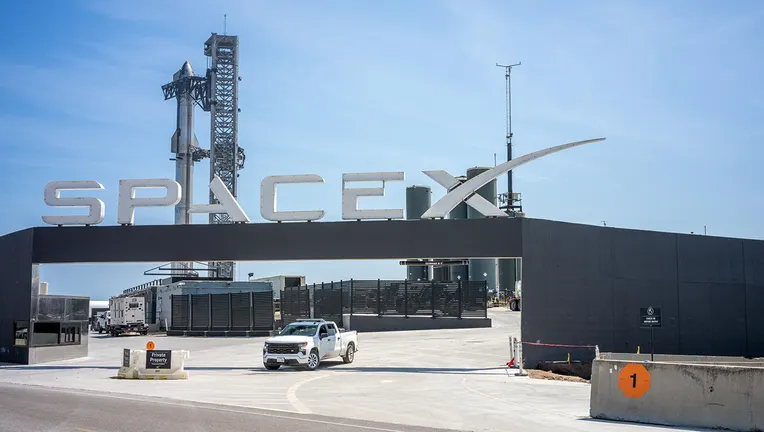
SpaceX CEO Elon Musk announced on February 9, 2026, that his aerospace company has redirected its priorities from Martian colonization to establishing what he describes as a “self-growing city” on the Moon, a project he believes could be completed within the coming decade.
For those unaware, SpaceX has already shifted focus to building a self-growing city on the Moon, as we can potentially achieve that in less than 10 years, whereas Mars would take 20+ years.
The mission of SpaceX remains the same: extend consciousness and life as we know it to…
— Elon Musk (@elonmusk) February 8, 2026
The announcement represents a striking reversal for an entrepreneur who has spent more than two decades advocating for Mars settlement as humanity’s insurance policy against extinction. Just 13 months earlier, Musk had publicly dismissed lunar exploration as “a distraction,” insisting SpaceX would proceed “straight to Mars”
In explaining the pivot, Musk pointed to fundamental logistical differences between the two destinations: Mars launch windows occur only once every 26 months with six-month transit times, while lunar missions can launch approximately every 10 days with two-day journeys. This frequency advantage, he argued, enables far more rapid iteration on settlement infrastructure and survival systems.
The timing of Musk’s announcement coincides with SpaceX’s recent acquisition of his artificial intelligence company xAI and plans for an initial public offering seeking a valuation exceeding $1 trillion. SpaceX informed investors that NASA contracts now constitute less than 5 percent of company revenue, with commercial Starlink satellite internet operations generating the vast majority of income.
Technical setbacks have plagued Starship development throughout 2025 and early 2026. The vehicle experienced a catastrophic failure in May when it disintegrated during atmospheric reentry, spinning uncontrollably after a fuel leak. While SpaceX achieved successful test landings in subsequent months, the rocket has yet to demonstrate critical capabilities required for deep-space missions, particularly in-orbit refueling.
The shift follows mounting pressure from NASA, which holds a nearly $3 billion contract with SpaceX to develop the Artemis program’s lunar lander. Former Acting NASA Administrator Sean Duffy publicly threatened to redirect the contract to competitor Blue Origin if SpaceX couldn’t meet development timelines.
Investor Peter Thiel, Musk’s longtime associate and fellow Trump supporter, claimed in a New York Times interview that “2024 is the year Elon stopped believing in Mars.” According to Thiel, Musk concluded that establishing Mars as a libertarian refuge from Earth’s governments would prove futile, as “woke AI” and socialist bureaucracy would inevitably follow colonists to the Red Planet.
Musk insists the Mars mission remains viable, though on an extended timeline. He stated that SpaceX will resume Mars development efforts in approximately five to seven years, but emphasized that “the overriding priority is securing the future of civilization and the Moon is faster”
In elaborating on lunar settlement plans, Musk suggested the Moon could serve as a manufacturing base, with factories leveraging electromagnetic mass drivers to deploy AI-powered satellites into deep space, potentially enabling civilization to “harness a non-trivial percentage of the sun’s power”
The strategic pivot represents Musk’s latest in a long series of revised Mars timelines. In 2016, he projected Mars landings by 2018. That deadline was subsequently pushed to 2022, then 2024, and most recently to late 2026 for uncrewed missions.
Whether SpaceX’s lunar ambitions prove more achievable than its Martian ones remains to be seen. What’s clear is that the company once synonymous with Mars exploration has fundamentally reordered its priorities—at least for now.
Source Citation:
Multiple sources including Time, CNN, Scientific American, Space.com, and other outlets reporting on Elon Musk’s February 9, 2026 announcement regarding SpaceX’s strategic shift from Mars to Moon colonization.