


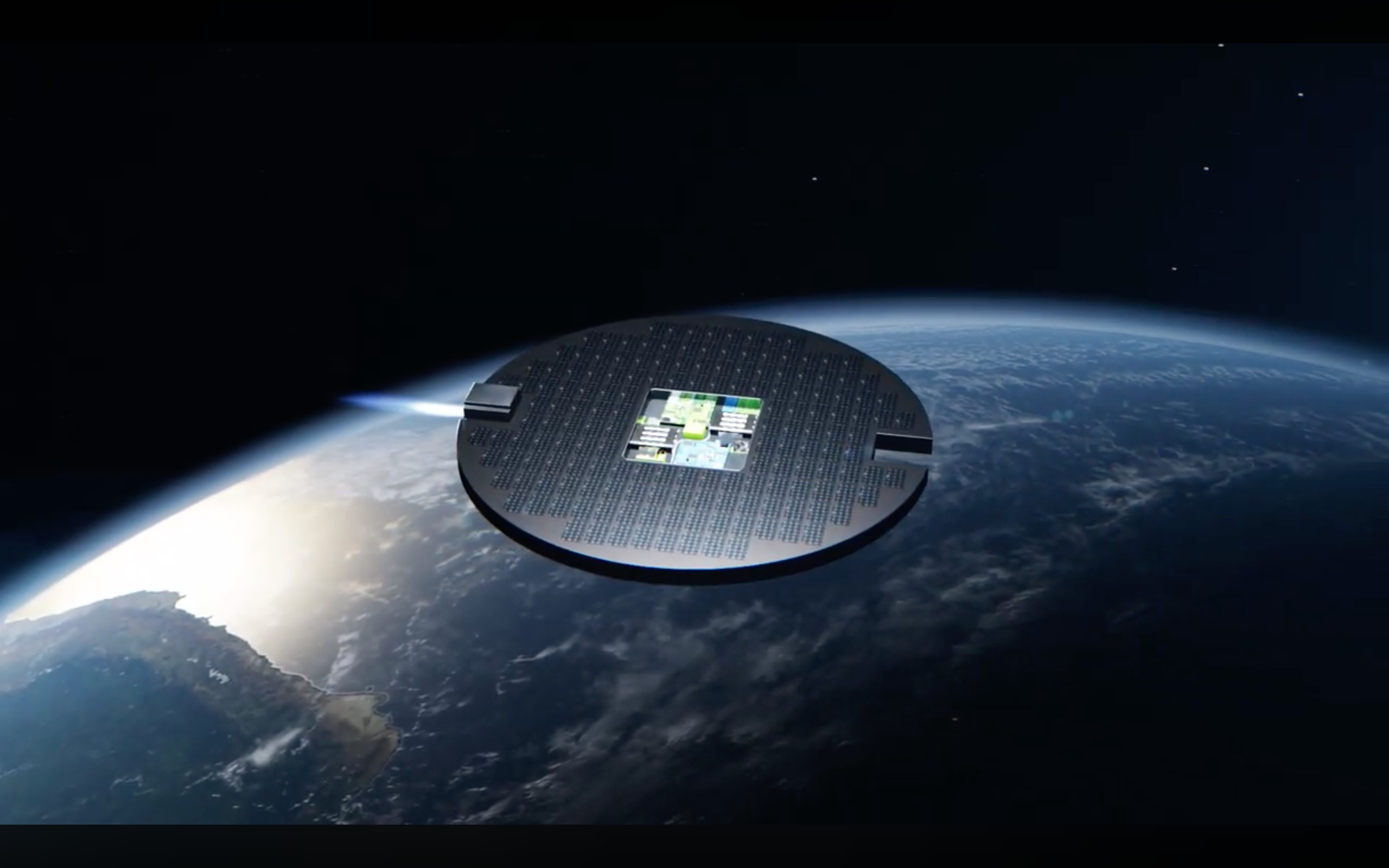
Space agencies have successfully deployed an innovative spacecraft design that abandons traditional boxy satellites in favor of flat, circular platforms resembling oversized records.
The revolutionary technology recently reached orbit following a successful Rocket Lab Electron launch. Mission control has confirmed all four demonstration units are operational and transmitting data, validating this radical new approach to satellite construction.
According to mission specialists, this circular platform expands options for engineers planning future space missions, offering capabilities that complement current technologies rather than replacing existing small satellite standards.
The demonstration payload traveled aboard Rocket Lab’s launch system, with the four circular craft stacked horizontally like vinyl records within a specialized deployment mechanism. Following separation from the rocket’s upper stage, each unit was released individually into orbit.
The circular configuration offers distinct operational advantages. When positioned edge-forward, the spacecraft encounters significantly reduced atmospheric resistance, enabling sustained operations at extremely low altitudes where drag typically limits mission duration. The platform also employs active orientation control, with mission controllers monitoring performance as the craft begins using its low-thrust propulsion system for orbital adjustments.
Development teams emphasized this technology addresses specific mission requirements where enhanced power generation, larger instrument mounting surfaces, and efficient launch configurations provide distinct advantages over traditional cubic satellites.
Since this represents the first orbital test of this spacecraft geometry, the team is treating it as a valuable learning experience. With all units successfully deployed, attention now shifts toward evaluating long-term performance, particularly the propulsion system’s effectiveness in achieving ultra-low orbital operations.
If objectives are met, this technology could enable an entirely new category of small spacecraft emphasizing operational simplicity, enhanced power capabilities, and launch efficiency. While major missions capture public attention, smaller technology demonstrations like this often proceed quietly – making this potentially transformative achievement particularly notable.