


The satellite industry stands at a transformative inflection point as 2026 approaches, with breakthrough technologies converging to redefine how space assets are built, operated, and monetized. Industry executives across commercial, defense, and regulatory sectors identify critical developments that will accelerate innovation and reshape competitive dynamics.
Direct Connectivity Goes Mainstream
The integration of satellite and terrestrial telecommunications reached commercial maturity in 2025, with major carriers launching direct-to-device offerings. Julie Kearney, partner at DLA Piper and former FCC Space Bureau chief, compares the trajectory to automotive backup cameras—transitioning from premium feature to consumer expectation to regulatory requirement. The FCC’s supplemental coverage from space framework now influences regulatory approaches globally, with Canada implementing similar rules and nations across Europe, Africa, and Asia developing their own standards.
The convergence extends beyond handsets to network infrastructure itself. ST Engineering iDirect’s Cynthia Harty highlights upcoming 3GPP standards enabling efficient satellite integration with 5G cores, with hybrid modems bridging traditional satcom waveforms and 5G New Radio. The critical question for operators with deployed terminal bases is not whether to migrate to non-terrestrial networks, but how to execute the transition while maintaining service continuity.
Artificial Intelligence Transforms Operations
Machine learning applications are evolving satellites from passive sensors into intelligent platforms delivering actionable insights. Vantor’s Susanne Hake describes how multi-domain intelligence fusion now provides real-time anomaly detection rather than raw imagery dumps. Government and commercial users increasingly demand automated workflows that interpret observations rather than simply capturing them.
Network management is similarly transforming through AI-enabled automation. Service providers using multiple satellite vendors can leverage machine learning for beam-switching decisions and anomaly correction. However, industry comfort with fully autonomous networks remains nascent—operators may detect and diagnose issues algorithmically, but human authorization for corrective actions remains standard practice.
AlixPartners’ S. Sita Sonty identifies domain-specific language models as the next efficiency frontier, particularly for aggregating systems engineering requirements across the space sector. While less glamorous than consumer-facing applications, codifying technical requirements could save millions in development costs by accelerating requirement generation and task flow creation.
Orbital Maneuverability Becomes Strategic Imperative
China’s demonstration of satellite “dogfighting” capabilities this year signals a new era of dynamic space operations. Retired Lt. Gen. John Shaw, former U.S. Space Command deputy commander, emphasizes that orbital refueling enables combat superiority similar to aerial refueling for air forces—not as a cost measure, but as a capability multiplier. The Space Force is sponsoring refueling demonstrations while the RG-XX program may mandate on-orbit servicing, with lunar mission sustainability providing additional urgency.
Beyond military applications, satellite servicing represents a sustainability and economic opportunity. Operational playbooks for in-orbit docking and relocation are maturing, enabling an automotive-style maintenance model where satellites receive repairs rather than premature deorbiting.
Sovereignty Drives Investment and Data Security
National control over space capabilities continues accelerating globally, with data security emerging as equally critical as asset ownership. Sonty describes “geopatriation”—moving data and applications to sovereign cloud systems—as data security on steroids. This trend drives not only constellation proliferation but integration of cybersecurity as a core solution element rather than outsourced function.
Boeing’s Rachelle Radpour identifies both opportunities and risks in sovereign requirements. While increasing supplier diversity and capabilities, protectionist policies limiting foreign content could ultimately reduce competitiveness and supply chain flexibility.
Europe Faces Make-or-Break Moment
European space investment reached historic levels with the IRIS² program and multi-billion-euro defense commitments from Germany and France. The pending joint venture between Airbus, Leonardo, and Thales represents both warning and wager—acknowledging current unsustainability while betting on consolidation delivering competitiveness and sovereignty simultaneously.
Cailabs CEO Jean-Francois Morizur distinguishes between investments building capabilities versus stimulating industry. Germany’s space funding raises questions about whether resources will develop operational systems or primarily subsidize employment. IRIS² receives higher marks by explicitly targeting service delivery rather than industrial policy alone.
Satellites Photograph Each Other
Non-Earth imaging capabilities—satellites photographing other satellites—are transitioning from novelty to strategic requirement. Vantor’s Hake describes NEI as “neighborhood watch” in orbit, providing visibility where radar and traditional sensors fall short. Applications include health monitoring, suspicious behavior detection, collision risk reduction, and filling the collision avoidance gap between launch and operational confirmation.
The capability enables persistent monitoring of high-interest objects and reduces ambiguity in congested orbital regimes. Broader adoption across government, allied, and commercial operators is expected as proximity operations and spacecraft modifications become increasingly common.
Leadership Change at NASA
Jared Isaacman’s re-nomination as NASA administrator signals potential major shifts at the agency. Impulse Space CEO Tom Mueller, SpaceX’s first employee, anticipates expanded commercial partnerships and COTS-style programs for lunar delivery. The Progressive Policy Institute’s Mary Guenther notes Isaacman’s leaked “Project Athena” document outlines ambitious plans, though implementation details remain open questions.
The incoming administrator inherits an agency reduced by layoffs and early retirements, confronting workforce fear following disruption across federal agencies. Guenther emphasizes that increased risk-taking requires holistic support structures—without institutional confidence, even necessary reforms may falter.
Launch Competition Finally Arrives
Blue Origin’s successful New Glenn booster recovery on only the second mission marks a potential turning point for launch market dynamics. The industry has awaited launch diversity for years while SpaceX dominated capacity. United Launch Alliance’s Vulcan underperformed cadence projections, Rocket Lab delayed Neutron to 2026, and Starship development encountered multiple setbacks.
Mueller expects Starship to resolve heat shield issues in 2026 and begin Starlink deployments while advancing to orbital refueling demonstrations. Combined with Amazon’s massive Kuiper launch backlog requiring multiple providers, the market may finally transition from single-provider dominance to genuine competition driving cost reductions.
Manufacturing Enters Industrial Era
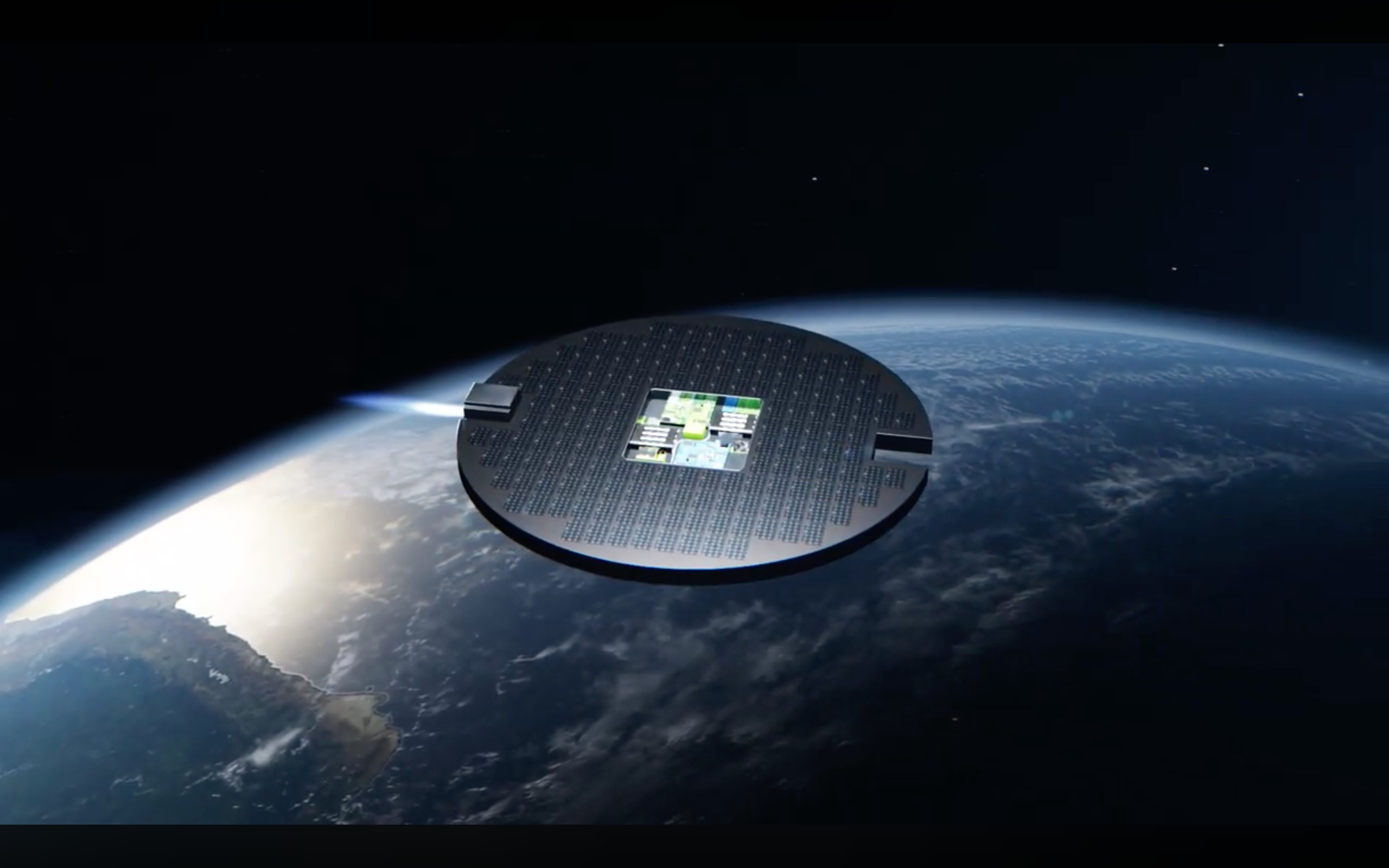
Satellite production is undergoing revolutionary change through additive manufacturing and modular architectures. Boeing’s integrated payload array exemplifies the transformation—what previously required six to nine months for integration and testing now emerges as printed circuits. Production flows are redesigned for proliferated architecture timelines with fewer parts and handoffs.
Manufacturers increasingly offer configurable platforms with common building blocks deployable across orbital regimes. The industry-wide push emphasizes reaching orbit faster while maintaining quality standards for constellations spanning GEO, MEO, and LEO.
Spectrum Valuations Reach Stratospheric Heights
Mobile satellite service spectrum capable of supporting D2D connectivity commanded unprecedented prices in 2025. AST SpaceMobile paid approximately $500 million to Ligado, then SpaceX stunned the industry with a $17 billion deal for EchoStar spectrum rights. Both transactions reflect operators securing dedicated spectrum rather than sharing arrangements with mobile network operators.
The SpaceX purchase resonates far beyond the immediate transaction, establishing pricing benchmarks that influence strategic decisions across the sector. Cailabs’ Morizur notes the deal may push additional operators toward optical communications to circumvent spectrum scarcity while prompting spectrum holders to reconsider asset valuations and deployment timelines.
As these ten trends converge, 2026 promises accelerated innovation across the satellite value chain—from manufacturing to orbit to ground infrastructure—reshaping an industry entering its most dynamic era.